Concrete Parking Lot Building
Commercial and residential concrete parking surfaces designed for Daytona Beach's traffic loads and coastal climate.
Learn more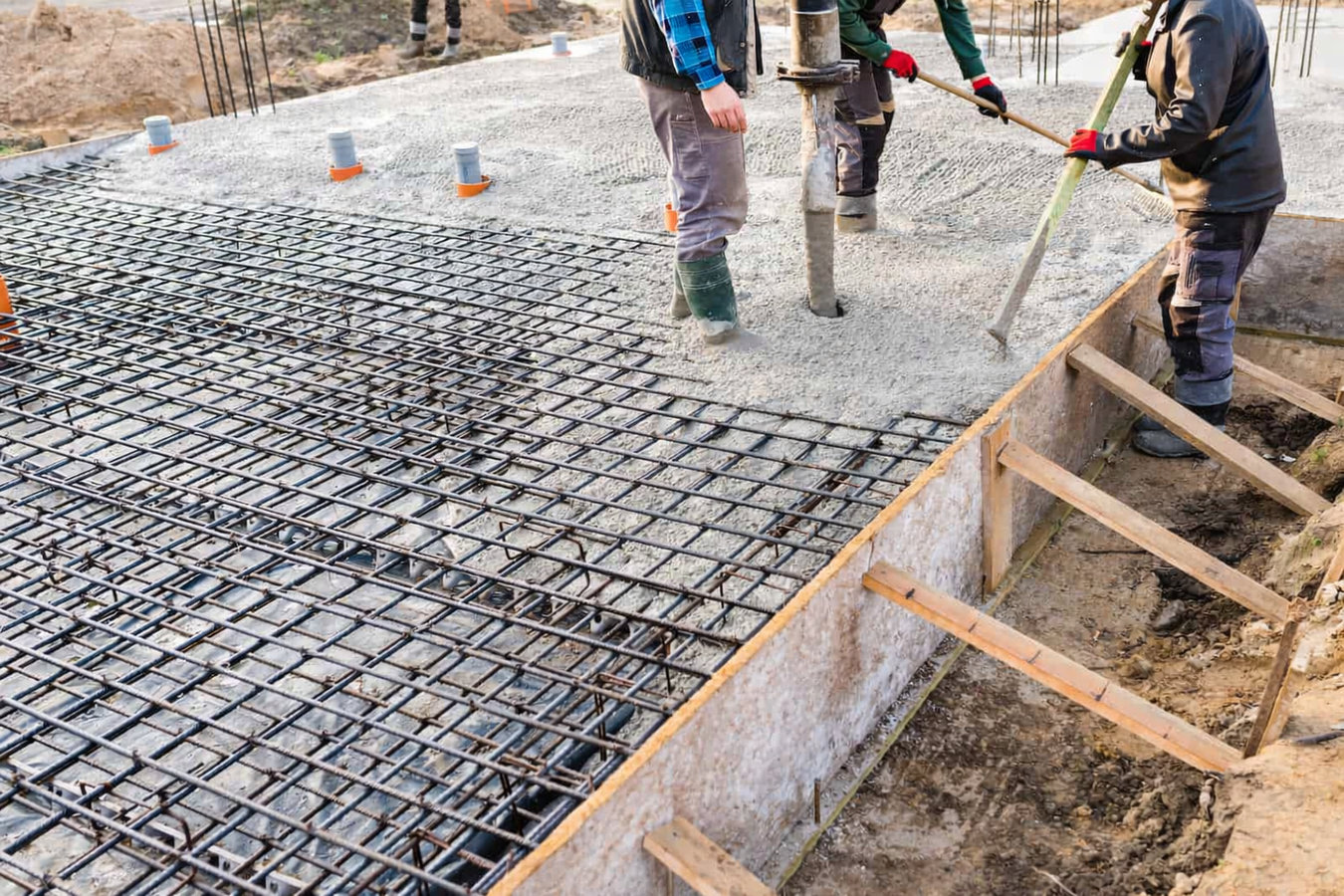
Building new or replacing an aging slab? We install foundations suited to Daytona Beach soil, permitted through Volusia County, and built to handle Florida's wind and moisture demands.
Foundation installation in Daytona Beach covers site grading, soil compaction, moisture barrier placement, steel reinforcement, and a concrete pour - most residential jobs take two to five days of active construction, with a Volusia County permit and inspection required before any concrete is placed.
Your foundation is the structure that holds your entire home up and transfers its weight safely into the ground. Everything above grade depends on what is below it. In Daytona Beach, that means working with sandy coastal soil that compacts less predictably than denser inland soils, a water table that sits just a few feet below the surface in many neighborhoods, and a Florida Building Code that requires foundations to resist the wind loads this coastal area can produce. If your project also calls for structural footings beneath load-bearing walls or exterior columns, our slab foundation building service covers the full scope alongside concrete footing work.
Volusia County requires a permit and at least one on-site inspection for all new foundation installations. We handle the application, communicate with the county building office, and schedule the inspection - the permit is never a step we skip or suggest skipping.
If doors or windows that used to open and close smoothly have started sticking, dragging, or leaving visible gaps at the corners, that is often a sign the structure has shifted. In Daytona Beach's sandy coastal soil, even small changes in moisture levels underground can cause a slab to move slightly - and that movement shows up first in your door frames and window openings. This is worth having looked at sooner rather than later.
Small hairline cracks in drywall are common and usually harmless. But cracks wider than a pencil line, cracks running diagonally from the corners of door frames, or cracks in your tile or concrete floor can signal that the foundation is moving unevenly. In older Daytona Beach homes - especially those built before the 1980s - the original slab may simply have reached the end of its useful life.
Stand in a room and look at where the walls meet the floor and ceiling. A visible gap - even a small one that was not there before - means part of your home has shifted relative to another part. This is a clear sign something is happening at the foundation level and deserves a professional assessment before the gap widens further.
If you are adding a room, garage, or accessory dwelling unit to your Daytona Beach property, a new foundation must be installed before any framing begins. Volusia County requires a permitted foundation for any new habitable or attached structure. Skipping this step can create serious complications when you go to sell the home or file an insurance claim.
We install concrete slab foundations for new homes, additions, garages, and accessory structures throughout Daytona Beach and Volusia County. Every job starts with a site visit - soil conditions and drainage vary enough across Daytona Beach's neighborhoods that we never quote from the phone. For projects requiring a concrete parking surface alongside new construction, our concrete parking lot building service can be scoped alongside foundation work to keep the project on a single schedule.
We handle the full Volusia County permit process - application, plan submittal, inspection coordination, and permit closeout. The pre-pour inspection is a required step, and we schedule it as part of the project timeline. You will receive a written estimate that breaks out labor, materials, site preparation, and permit fees separately so you can compare bids fairly. Once the foundation passes its final inspection, we close out the permit so your project has a clean documented record.
For homeowners building a new home or permitted structure, sized and reinforced for the specific soil conditions and structural loads of your Daytona Beach lot.
Properly designed to work with or separate from your existing foundation depending on structural and code requirements, with the same permit and inspection process.
For older homes in Daytona Beach's 1950s-1980s neighborhoods where the original slab has cracked, settled, or developed moisture problems beyond repair.
Sheds, workshops, pool enclosures, and detached garages all require permitted foundations in Volusia County - we handle the full scope from permit to final inspection.
Daytona Beach is in a high-wind zone on Florida's Atlantic coast, and the foundation your home sits on must be engineered and anchored to work with the rest of the structure to resist hurricane-force wind loads. This is not the same as standard foundation work in a calmer climate. Florida's building code is among the strictest in the country specifically because of this wind risk, and Volusia County enforces it on every permitted foundation job. The Volusia County Building and Code Administration handles plan review and inspection for all new foundation installations - we work directly with their office on every project.
Many of Daytona Beach's residential neighborhoods - particularly in the Midtown and beachside communities - have homes built in the 1950s through the 1970s where original foundations were poured thinner and with less reinforcement than what is required today. If you are replacing or repairing a foundation on an older home, a thorough site assessment upfront helps surface conditions that could affect the timeline or cost before work begins. We serve homeowners across the area, including Deltona and Port Orange, where the same Volusia County permit requirements and coastal soil conditions apply.
We ask a few basic questions - what you are building, the approximate size, whether you have spoken with the county - then schedule a site visit before giving you any numbers. The soil conditions, drainage, and access on your specific lot all affect what the job will actually involve. You will hear back within one business day of your inquiry.
After the site visit, you receive a written estimate breaking out labor, materials, site prep, and permit fees separately. Once you approve and sign, we submit the permit application to Volusia County Building and Code Administration on your behalf. Plan for the review process to take a few days to a couple of weeks depending on current county workload.
The crew grades and compacts the area, installs the moisture barrier, places the reinforcement, and forms the slab. A county inspector verifies the setup before any concrete goes down. On pour day, the crew works efficiently to fill, level, and finish the surface - in Daytona Beach's heat we take specific steps to protect the fresh concrete from curing too fast.
After the pour, a Volusia County inspector verifies the work meets local building requirements. We coordinate the inspection and advise you on what can and cannot happen on the slab during the curing period. Once the permit is passed and properly closed out, you have a clean paper trail - the foundation is on record as an approved, inspected structure.
We visit your site, assess your soil conditions, and give you a written estimate at no cost or obligation. Call or submit a form and we will be in touch within one business day.
(386) 278-1096We submit the permit application, communicate directly with the Volusia County Building and Code Administration office, coordinate the required pre-pour inspection, and close out the permit when the job is done. You never have to call the county building office - that is our job from the first day to the last.
Daytona Beach's water table sits just a few feet below the surface in many neighborhoods. A proper vapor barrier is one of the most important parts of a foundation job here - we treat it as a core step on every project, not an option. That means a drier, healthier home interior for years after the pour.
Daytona Beach falls within Florida's high-wind zone, and foundations here must be designed and anchored to resist hurricane-force loads. We design every foundation to meet these requirements, not just minimum code. The American Concrete Institute publishes the concrete construction standards we follow on every job.
Sandy soil conditions in Daytona Beach vary significantly between neighborhoods - a lot near the Halifax River may need very different preparation than one a mile inland. We visit your site and assess the actual ground conditions before giving you a number, so you are not surprised by extra preparation costs halfway through the job.
Working in Daytona Beach every day means we know what Volusia County inspectors look for, what the soil in different parts of the city requires, and what a foundation needs to hold up through decades of Florida weather. That is the difference between a foundation that lasts and one that becomes a problem.
Commercial and residential concrete parking surfaces designed for Daytona Beach's traffic loads and coastal climate.
Learn moreNew residential slab foundations poured with post-tension systems or rebar reinforcement suited to Daytona Beach's coastal sandy soil.
Learn morePermit season books up fast - contact us now and we will schedule your free on-site assessment before the summer rains arrive.