Foundation Raising
If existing footings have settled or shifted, foundation raising can lift the structure back to level before new footing work begins.
Learn more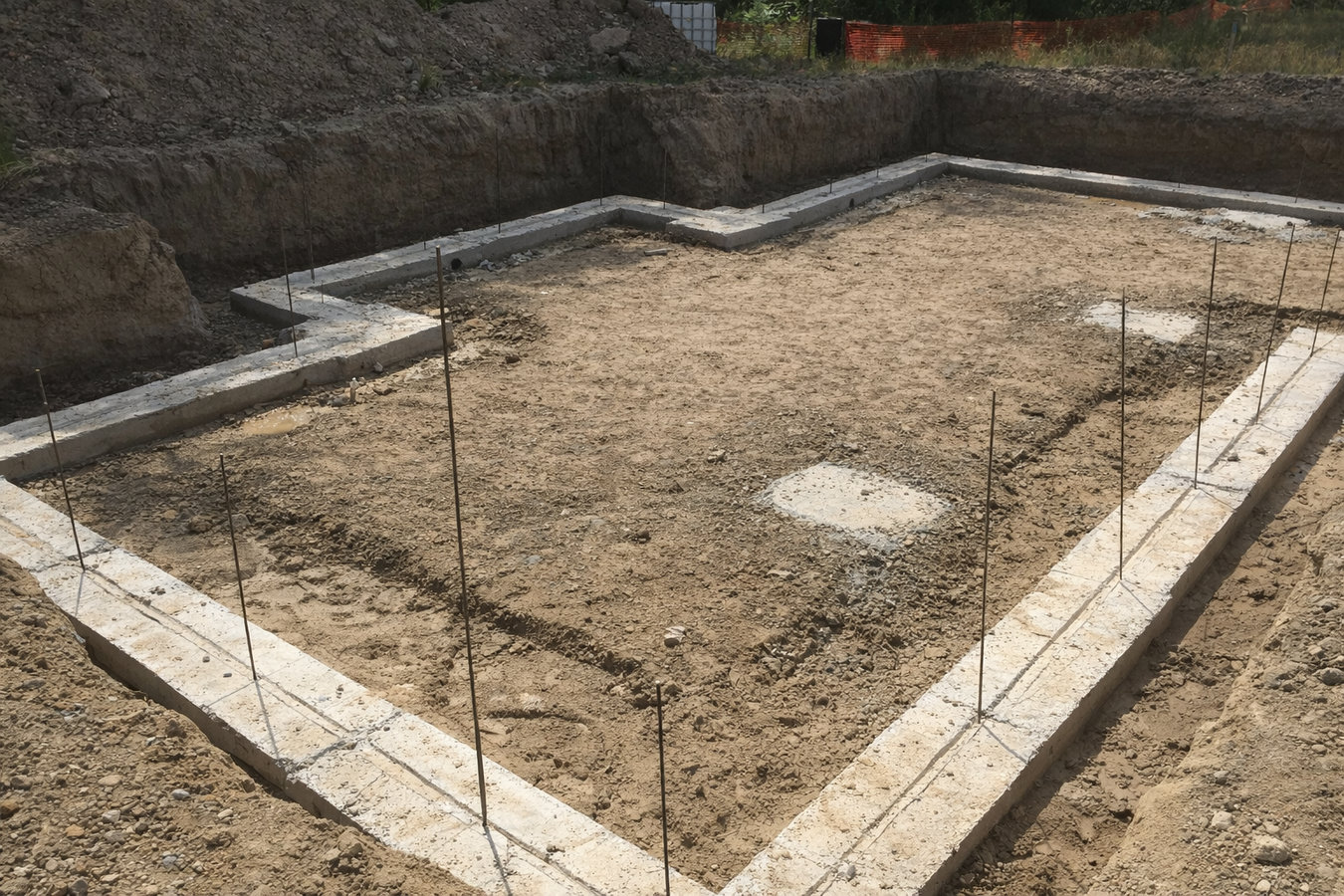
Planning an addition, deck, or outbuilding? Get concrete footings sized for Daytona Beach's sandy soil and hurricane wind requirements - with permitted work and Volusia County inspection before a drop of concrete is poured.
Concrete footings in Daytona Beach are dug to a depth suited to local sandy soils and Florida hurricane wind load requirements, inspected by a Volusia County inspector before the pour, and finished in one to two days of active work - though you should plan three to five weeks total from contract to when building can continue, accounting for permit approval and curing time.
A footing is the hidden base that sits beneath a wall, column, deck post, or home addition - it spreads the weight of whatever sits above it across a wider area of ground so the structure stays stable and level over time. Most homeowners in Daytona Beach start thinking about footings when they are planning to add something: a room addition, a screened porch, a carport, a deck with masonry columns, or a detached garage. Footings are also what you need when an existing one has cracked, shifted, or been undermined by the kind of soil erosion that happens in Florida's wet season. If the project you are planning eventually leads to a full new foundation, our foundation installation service is the natural next step.
We handle the Volusia County permit application, arrange the required utility marking through Florida's 811 service before any digging starts, and coordinate the county inspector visit that checks the trench before the concrete is poured. That inspection is the step that protects you - once the concrete goes in, nobody can verify what is buried underneath without digging it up again.
If you are thinking about a room addition, screened porch, carport, or any structure attached to your house, new footings are almost certainly part of the job. In Daytona Beach, where hurricane wind loads are a real concern, these footings need to be engineered for the conditions here - not just sized generically. This is the most common reason homeowners in this area call a concrete contractor.
Diagonal cracks running from corners of windows or doors, or stair-step cracks in block walls, are often a sign that something below is moving. Daytona Beach's sandy soils can allow footings to shift gradually if they were undersized or if soil has washed away beneath them. If you are seeing these patterns, it is worth having a contractor look at what is happening at the foundation level before it gets worse.
When the ground moves under a footing, the structure above can shift slightly out of square - and the first place you notice it is usually doors and windows that suddenly do not work as they used to. This is especially common in older Daytona Beach homes after a wet season, when saturated sandy soil shifts. It does not always mean a major repair, but it is worth investigating sooner rather than later.
Deck posts, heavy masonry fence columns, and outbuildings all need footings to stay upright over time. In Florida's wet climate, wood posts set directly in the ground rot quickly - and even posts set in concrete can fail if the footing was too shallow for local soil conditions. If your existing deck or fence is leaning or wobbling, failed footings at the base are a likely cause.
We pour concrete footings for residential additions, decks, carports, outbuildings, masonry fence columns, and freestanding structures across Daytona Beach and Volusia County. Every footing project starts with a site visit to assess what the ground actually looks like, not just what a plan assumes - because Daytona Beach's sandy coastal soil varies enough across neighborhoods that a one-size-fits-all approach does not work here. We size footings for the load above them and for the hurricane wind uplift requirements that Florida's building code applies to structures in this region. The trench is inspected by a Volusia County inspector before the concrete is poured, so there is an independent verification that the work meets code before it is buried. Foundation raising is available as a companion service when existing footings have settled and the structure above needs to be brought back to level before new work begins.
In Daytona Beach's wet season, excavated trenches can fill with water before the pour if the timing and site management are not handled properly. We schedule pours to account for weather and have the equipment to pump standing water out of trenches when needed - that is a routine part of working in this area, not an unusual complication. The University of Florida IFAS Extension has published guidance on Florida soil conditions and construction practices that informs how we approach footing design in coastal sandy-soil environments like Daytona Beach.
Best for room additions, load-bearing walls, and structures where weight needs to be distributed along a full length of foundation.
Suited for deck posts, carport columns, masonry fence piers, and freestanding structures where a single point load needs a stable base.
Good for older Daytona Beach homes where existing footings have cracked, shifted, or been undermined by soil movement or erosion.
Works for any homeowner who needs the Volusia County permit pulled and inspector coordinated before concrete goes in - we handle the full process.
Daytona Beach's sandy coastal soil does not behave like the denser clay or loam soils found in other parts of Florida or the country. Footings here often need to be wider or deeper than a generic plan would call for, because the soil simply does not bear weight as firmly. The high water table - particularly in neighborhoods near the Halifax River and the Atlantic coast - means excavated trenches can fill with water during the wet season before a pour is ready, which requires proper management to keep the concrete quality where it needs to be. Many homes in established Daytona Beach neighborhoods like Midtown and the beachside corridor were built between the 1950s and 1980s, before Florida's current hurricane wind load requirements and modern footing standards were in place. If you are adding onto an older home, what is already in the ground may not match what today's code requires, and a contractor who does not check that before giving you a quote is setting up a problem. Homeowners in Deltona face similar soil and permit conditions under the same Volusia County framework.
Florida's building code includes strict requirements for how structures must be anchored to resist hurricane-force winds, and footings are a key part of that system. Daytona Beach sits in a high-wind zone, which means footings for additions, decks, and outbuildings must be designed to handle uplift forces - the tendency of wind to push up under a structure and peel it away. These requirements are more demanding than what you would see in calmer climates, and a contractor who is not familiar with them will undersize the footing and create a real safety risk. Homeowners across Palm Coast and the surrounding coast face the same wind-load engineering requirements we work with daily.
Footing work is too site-specific to quote accurately over the phone. We come to your property, look at what you are building and where, and assess the ground conditions. You hear back from us within one business day with a written estimate.
Once you approve the quote, we submit the Volusia County permit application and arrange utility marking through Florida's 811 service - required by law before any digging begins. Permit approval typically runs one to two weeks.
The crew digs the trenches to the depth and dimensions on the approved plan. Before any concrete is poured, a Volusia County inspector checks the trench and any steel reinforcement. This inspection is your protection - we coordinate it, and you do not need to be home.
Once the inspection passes, the concrete is poured, leveled, and the forms are removed after it sets. In Daytona Beach's summer heat, pours are often scheduled for early morning. Plan on at least a week before light building can resume on top of the fresh footing.
We come to your property before giving you a number - and we handle the Volusia County permit and inspection process start to finish so you do not have to.
(386) 278-1096Daytona Beach's coastal sandy soil requires footings that are wider and often deeper than what a generic plan calls for. We assess your specific lot conditions before we commit to dimensions - so the footing is sized for what is actually under your property, not for a hypothetical average. That is the difference between a footing that holds for 30 years and one that shifts after the first wet season.
Daytona Beach sits in a high-wind zone, and Florida's building code requires footings for additions and structures to handle significant uplift forces from hurricane-strength winds. We design every footing with those requirements factored in from the start - not as an afterthought. A footing that is not engineered for local wind loads is one that can fail when it matters most.
We pull the Volusia County permit, arrange the utility marking call through Florida's 811 service, and coordinate the county inspector visit before concrete is poured. You receive documentation that the inspection passed - which becomes part of your home's permit record and is something future buyers and insurers may ask to see. You should not need to navigate the permit office yourself.
Many homes in Daytona Beach were built before current footing standards were in place - particularly in the 1950s through 1980s. We look at what is actually in the ground before designing new work, so you are not paying for a plan built around assumptions about your existing structure. That honest assessment upfront prevents surprise change orders midway through the project. The Florida Building Commission publishes the current structural requirements that govern footing work in this state.
We work in Daytona Beach year-round and understand the soil, weather, and regulatory conditions that shape footing work here. Every project is assessed on its own terms - not run through a generic process.
If existing footings have settled or shifted, foundation raising can lift the structure back to level before new footing work begins.
Learn moreBuild a complete new foundation on top of your footing system for additions, outbuildings, or full structure replacements.
Learn morePermit slots with Volusia County fill up during busy seasons - reach out now to get your project on the schedule before the wait grows.