Slab Foundation Building
Build a solid slab foundation for a new structure on your Daytona Beach property, engineered for sandy coastal soil.
Learn more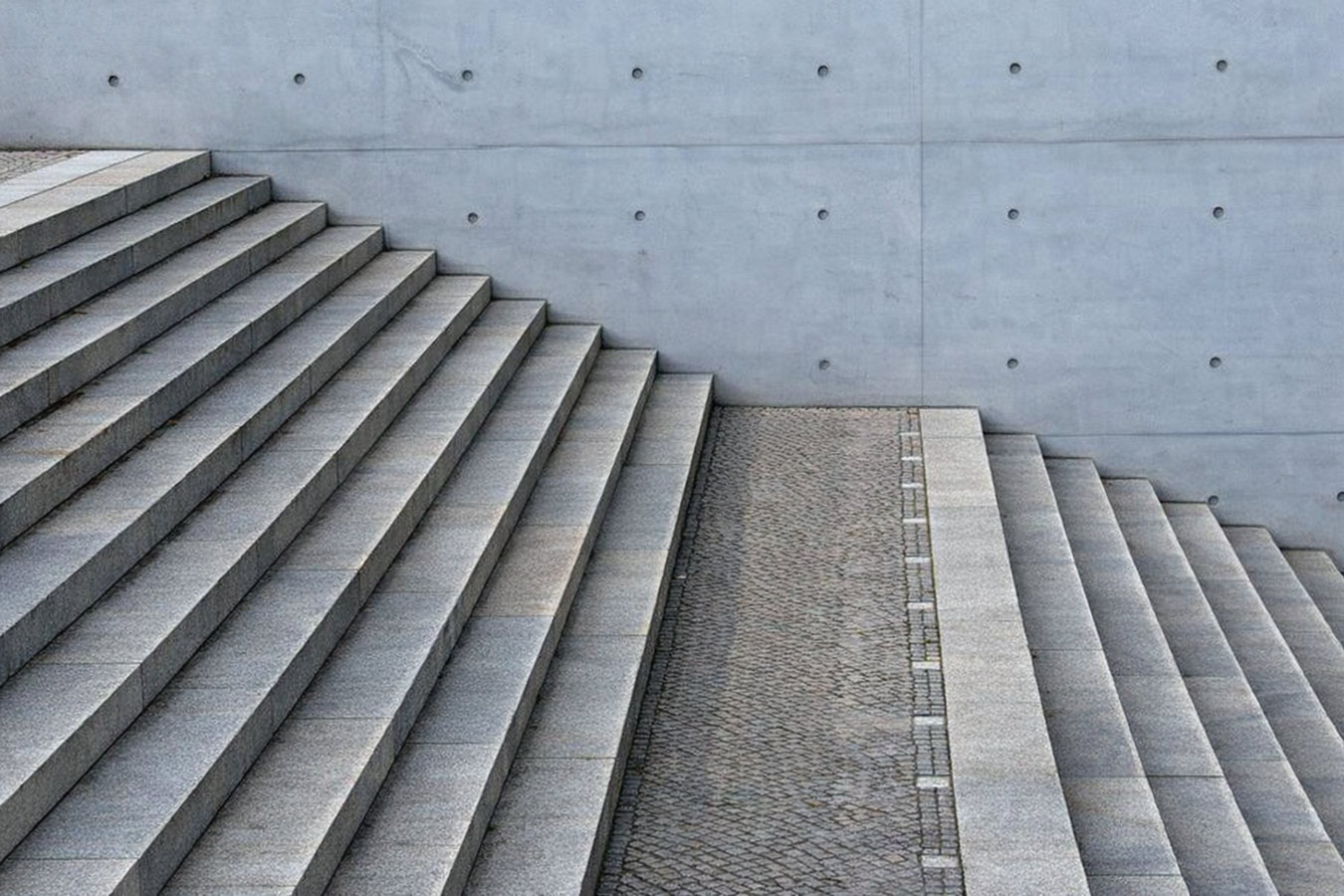
Cracked, tilting, or dangerously slick steps are a fall risk every single day. Get new concrete steps built on a stable base with a slip-resistant finish that holds up through Florida rain.
Concrete steps construction in Daytona Beach involves pulling a city permit, compacting and stabilizing the sandy soil beneath the steps, setting forms, pouring reinforced concrete, and finishing the surface with a broom texture for wet-weather grip - most standard front entry projects take one to two days of active work, with a 24 to 48 hour curing period before light foot traffic.
A large portion of Daytona Beach's housing stock was built between the 1950s and the 1980s. Many of those original concrete steps were poured without reinforcing steel and on soil that was never properly stabilized - and decades of Florida sun, rain, and sandy ground movement have caught up with them. Steps that rock underfoot, show cracks running through a tread, or sit noticeably tilted to one side are not just an eyesore. They are a fall risk for you, your family, and anyone who visits your home. If you are also dealing with soil erosion or a grade change in your yard, our concrete retaining walls service often pairs well with steps work to address both problems at once.
The City of Daytona Beach requires a building permit for structural concrete work attached to your home, including new or replacement steps. We handle the application and schedule the city inspection - you should not have to navigate the building department on your own.
Cracks wider than a hairline - especially ones that go all the way through a tread or riser - mean the structural integrity of your steps is compromised. In Daytona Beach's sandy soil, cracks often signal the ground underneath has shifted, and patching the surface will not fix that underlying problem. Steps in this condition are a trip hazard and should be evaluated soon.
If any step moves when you put your weight on it, or if the whole staircase looks like it has shifted to one side, the base underneath has likely eroded or settled. This is especially common in Daytona Beach homes near low-lying areas where rainwater drains slowly and gradually washes away the soil beneath the concrete. A tilted step is a genuine fall risk for anyone using your front door.
Florida's humidity means outdoor concrete collects mildew faster than in most other states. If your steps have dark staining that keeps coming back after cleaning, or the surface feels crumbly rather than solid, the concrete has likely started to deteriorate from the inside out. Sealing or painting over that surface is a temporary fix that will not last.
Many Daytona Beach homes built in the mid-20th century still have their original concrete steps. Steps that old were often poured without the reinforcing steel rods that modern steps use, making them more brittle and more prone to cracking under normal use. If your home is from that era and you have never had the steps replaced, it is worth having a contractor take a look.
We build standard front entry steps and more involved staircase designs depending on what your property requires. The most common project is a three to five step entry set at the front door, but we also work on side entries, landings, and steps connecting different grade levels in a yard. Every set of steps starts with proper ground preparation - the soil is compacted and a gravel base layer is added before the forms are set. This is the step most contractors rush through, and it is the one that determines whether your steps stay level and solid for decades or start shifting within a few years. We also handle projects where new steps connect to an adjacent retaining wall or a slab foundation, coordinating both scopes of work so the finished result is consistent and properly integrated.
Surface finish options include broom texture - the most practical choice for Florida's wet weather - as well as exposed aggregate and stamped patterns for homeowners who want a more decorative result. We apply or recommend sealing the surface once the concrete has fully cured, which helps block moisture and keeps the steps looking clean longer in Daytona Beach's humid environment. The Portland Cement Association has useful guidance on proper curing and finishing practices, and we follow those standards on every job.
Suited for homeowners replacing cracked, tilted, or aging three to five step front entry sets - the most common request in Daytona Beach's older neighborhoods.
For homes that have never had proper concrete steps at a door, or where wood steps are being replaced with a permanent concrete structure.
Good for entries that need a wider flat area at the top or bottom of the steps, such as wheelchair-accessible approaches or double-door entries.
Works well for homeowners who need step access between different elevation levels in a yard, often in combination with a retaining wall.
Daytona Beach gets about 50 inches of rain per year, most of it falling in intense afternoon storms from June through September. Steps without a slight forward pitch on each tread collect water instead of shedding it - which is a slip hazard every afternoon during rainy season. The city also sits on sandy coastal soil that does not hold the way compacted clay or rock does. Steps poured on uncompacted sandy soil settle and crack faster than most homeowners expect, which is why so many older Daytona Beach homes have steps that look like they have been on a slow slide for years. Factor in that a significant portion of the city's housing stock was built in the 1950s through the 1970s using building practices that predate modern reinforcement standards, and you have a lot of homes with steps that are genuinely at the end of their useful life.
We work throughout Daytona Beach and regularly serve homeowners in nearby communities such as Port Orange and Deltona. The same sandy soil and rainfall conditions apply across the broader Volusia County area, and we approach every project with those local realities in mind.
We will get back to you within one business day. We will ask a few basic questions about your current steps and what you are looking for so we can come prepared. A free on-site estimate follows at a time that works for you.
We visit your property, check the condition of your existing steps, assess the ground underneath, and give you a written estimate covering labor, materials, and permit fees. You know the full cost before any work starts.
We apply for the City of Daytona Beach building permit - usually processed within a few business days to a week. Once in hand, we break out and haul away the old steps, then prepare a compacted gravel base before setting the forms.
Concrete is poured, finished with a broom texture, and left to cure for 24 to 48 hours before light foot traffic. A city inspector checks the work before the project closes out. We leave you with care instructions and sealing guidance before we go.
Free written estimates, no obligation. We handle the City of Daytona Beach permit and the inspection. You just pick the finish.
(386) 278-1096Daytona Beach's coastal sandy soil is one of the leading causes of premature step failure in this area. We compact the soil and add a gravel base layer before every pour - not as an optional upgrade, but as a standard part of every job. Steps built on a proper base stay level and crack-free far longer than those poured straight onto uncompacted sand.
Daytona Beach gets about 50 inches of rain per year, with afternoon downpours nearly every day from June through September. We finish every set of outdoor steps with a broom texture that gives solid footing even when the surface is wet. A front entry that is safe in the rain is not a luxury in this city - it is a basic requirement.
The City of Daytona Beach requires a permit for structural concrete work attached to your home. We apply for it, provide you the permit number before work begins, and coordinate the city inspection at the close of the project. Permitted work protects you at resale and with your insurer - and it means a third party has independently confirmed the job was done right.
You get a clear written estimate before we touch a thing. If something unexpected turns up once we start digging - like soil that is worse than it looked from the surface - we talk to you before we proceed. No bill at the end that looks nothing like the number you agreed to. The City of Daytona Beach Building Services page is where we pull your permit - you can see the process for yourself if you want to.
Sound base preparation, a safe finish, a permitted project, and pricing you can rely on - those are the four things that matter most for concrete steps in Daytona Beach, and they are what we deliver on every job.
Build a solid slab foundation for a new structure on your Daytona Beach property, engineered for sandy coastal soil.
Learn morePair new steps with a retaining wall to handle grade changes and prevent erosion in your yard.
Learn moreTilted, cracked, or slippery steps get worse with every heavy rain. Call us today or request a free estimate online and get a written price before any work begins.